Safeguarding also involves empowering children to engage with normal family life and routine.
For any child with reduced mobility, there comes a point where their- and family life- is disrupted, because of a fixture present in almost every home: the stairs.
We, the UK’s biggest provider of stair navigation solutions to local authorities and the NHS, have developed a potential resolution, that prevents any disruption to the home, can remove the need for a major DFG adaptation/modification or re-housing.
We deliver access to the home, retaining routine and normal life.

Our proposal is cost-efficient: the core components not only answer the problem of giving them and their family a safe environment at home, they grow with the child to adulthood.
When the original recipient no longer needs the S-Max, Occupational Therapists can prescribe/recycle/re-issue it to another child. And there's little or no additional capital equipment cost.
Central is our proposition is our top-selling S-Max mobility wheelchair stairclimber. S-Max is a core powerpack unit that can be attached to a wheelchair or have an integral seat.
Add our unique Universal Seat System, which adjusts to individual need, and the child can be safely transported as they develop from infancy into maturity.
The way S-Max works further enables Occupational Therapists to enhance safety at home.
S-Max traverses the stairway and on to destination. S-Max removes the risk of a transfer at the top of the stairs that is inevitable with a stairlift.
Normal family life continues with dignity and privacy.
“Two of the four key aspects of safeguarding children are promoting welfare: ensuring children have the best outcomes and are growing up in safe, effective circumstances and early intervention: supporting children and families when problems emerge to prevent issues from escalating(1).
“Difficulty managing stairs is one of the most common reasons why any family with a disabled member needs intervention and support.
"Where appropriate, our S-Max is a time- and cost-effective means of preserving safety.
"We can support in PEOP assessment, service, deliver the S-Max and train the family in its safe operation within two working weeks. If one is available in Equipment Stores, it can be effected even faster!
“The child is kept safe. Their- and their family’s- wellbeing, mental health, dignity and privacy- is protected.”
Our re-issue scheme, and how the S-Max works, is explained on our website: www.aatgb.com/ots/ and www.aatgb.com/s-max/.

Any MOU over two storeys should have a lift.
But what if that lift is out of order- a common occurrence and outside the realms of PEEPS(2), or if the MOU is only two storeys.
If the tenant has impaired mobility- the most common limitation- they become a prisoner in their home.
A stairclimber/ stairclimbing wheelchair such as AAT’s top-selling S-Max delivers safe egress.
Unlike conventional evacuation chairs, it also delivers safe ingress.
Thus the disabled tenant is able to come and go as normal.
A portable, mobile unit, S-Max means there is no permanent nor temporary fixture to the stairway, thereby common parts are not impeded for other tenants.
All that is needed is a person trained in the equipment to control the battery-powered unit- whether someone who cares for the tenant, or the building manager.
AAT’s S-Max can travel 300 steps from a single battery charge- equivalent to a 20-storey block of flats.
The standard unit can be easily attach to most common wheelchairs; the Sella version incorporates an integral seat with support arms and harnessing for optimal safety for the passenger.
Using this technique, the disabled tenant is safely able to get in and out of the building, into their home and into the outside space and beyond.
Use of stairclimbers in MOU’s is increasingly popular up and down the country- proven in practice from East London to Yorkshire.
They are a cost-effective, non-disruptive way of enabling the tenant to remain in their home, for the social housing provider to meet their legal obligations and to provide short-term safe access/exit until the lift is repaired/operational.
The housing association has an asset it can re-cycle/re-use when the original recipient no longer needs it to manage risk with other tenants should they become disabled whilst more suitable, ground-level accommodation is found for them or when the lift is repaired/operational again.
For each recipient, AAT provides in-depth assessment of the person and the ‘environment’ top assess suitability, and trains the operator in the stairclimber’s safe use.
Full details of the S-Max stairclimber can be found at https://www.aatgb.com/s-max-sella/ where a free, no obligation assessment can also be booked.
ENDS
References:
(1) https://www.disabilityrightsuk.org/news/disability-groups-call-more-accessible-housing-privaterentershttps://www.disabilityrightsuk.org/news/disability-groups-call-more-accessible-housing-privaterenters
(2)Personal Emergency Evacuation Plan
Announcing a new service, that assures constant, pressure-free comfort and postural support and correct alignment, 24/7: bespoke cushions.
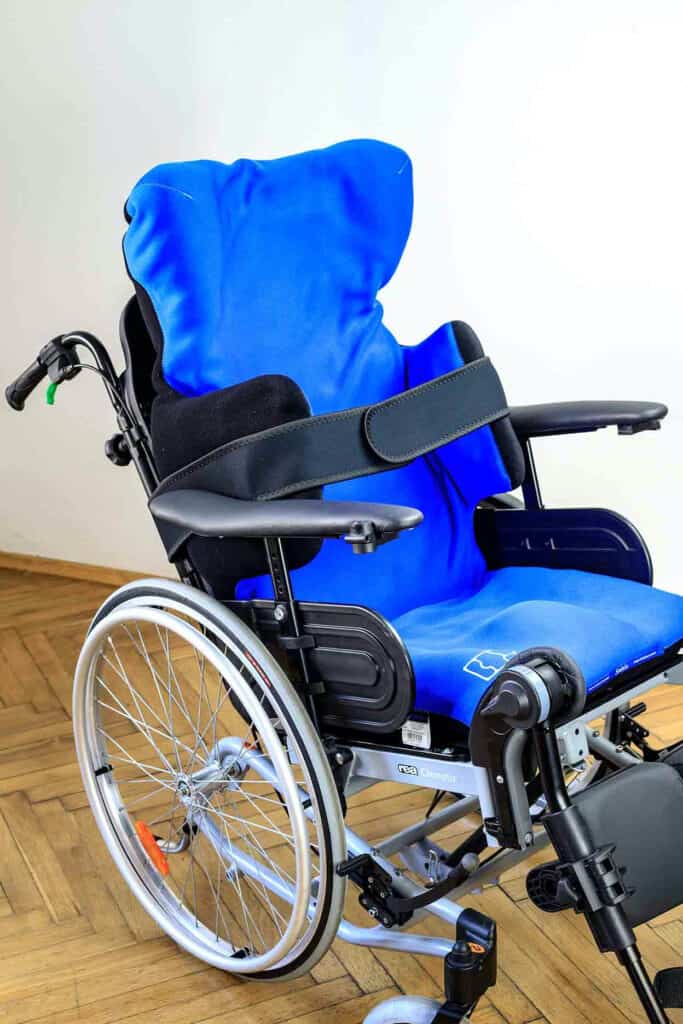
The service builds on our specialised manufacturing capability, which already produces standard cushions in shapes from a thin arm support to a full-sized mattress.
We can cost-effectively produce our unique Stabilo vacuum posture cushions, in any shape or size, to your individual order, should none of the standard cushions quite meet the client’s specific posture support/correction/alignment issues.
The nature of Stabilo construction- from advanced neoprene- coupled with the vacuum technology, means its cushions can be formed exactly as needed- even bent, curved- and the precise contours for each client maintained.
The vacuum technology extracts the air from the cushion, precisely moulding and fixing the exact configuration of the posture support without any pressure points. Even the degree of firmness can be minutely set.
Because of the way the shape is fixed, there is no need for the frequent re-plumping inevitable with conventional cushions. The vacuum technology holds the shape for weeks at a time.
Should any adjustment be needed to maintain comfort, this can be executed and controlled by the carer/care team.
There is no additional cost if/when re-shaping is needed, just a few seconds of time.
Further, the advanced neoprene material contains no latex, is non-combustible and breathable. It can be wiped clean.
The custom order facility is already being utilised. An OT needed a means of making a client comfortable who had little/no ability to hold their head up, so their chin was on their chest. Working with the OT, AAT designed and produced a C-shaped Stabilo cushion, that can be easily put in position and removed, whilst delivering comfort and postural support.
"Every person, and how their illness or impairment affects them, is unique. “Comfort is fundamental to their ability to cope with daily life. It impacts on their- and their carer(s)’ physical and emotional health & wellbeing. Now, with our bespoke service, Occupational Therapists, physiotherapists have the ability to deliver that comfort, cost-effectively.”
Peter Wingrave, AAT Director
Full details of the Stabilo concept and how it works, and the opportunity to arrange a free, no obligation assessment, can be found on AAT’s website @ https://www.aatgb.com/posture-cushions/.
For a disabled child, making sure they are correctly supported All the time can be hard. What works one hour may not for the next 23. Their posture varies as the ADL changes.
Our multi-purpose Stabilo posture support cushions are the first on the market to deliver infinitely variable and adjustable correct posture support.

The cushions' ability to be quickly and easily re-formed as needed, at home, by the care giver, means the child’s comfort- without pressure points- can be achieved 24 hours a day, 365 days a year!
We have evolved numerous cushions shapes, that can function individually or combined to achieve the exact correct posture support needed.
They include Comfortable and Comfortable Plus for chairs/ wheelchairs, the Chilli Bean postural seat and mattress-sized Grande.

Based around the concept of a bean bag, the Stabilo cushions can be precisely and uniformly shaped with mm precision.

The carer then simply attaches a pump to remove the air between the ‘beans’ and fix the shape of the cushion.
The process holds the shape for weeks.
As tweaks are required according to the child’s needs at the time, the carer simply allows a little air back into the cushion, re-shapes as required, and refixes the contours with the pump.
Small, velcro-fixed versions mean a single limb can be stabilised during a period of therapy. Large versions replace bed mattresses and can be exactly formed to shape and support the trunk and limbs as needed, even allowing creation of abduction wedges.
The Stabilo’s unique structure means they can also deliver integrated and supplementary sensory stimulation, via the tactile neoprene wipeable surface or by positioning of a smart speaker underneath for vibration and/or sound to transfer through the cushion.
“The concept of Stabilo came from a parent who couldn’t find suitable postural support for their disabled child. The product’s delivery of a solution for the child’s needs is therefore at the centre of every version. The diversity and flexibility of the cushions means they can do almost anything- support a child to join in family time, to achieve a good night’s sleep, or be more adventurous- even flying, canoeing, swimming, bathing or abseiling!”
Peter Wingrave, AAT Director
Full details, and the opportunity to book a free, no obligation assessment, can be found here:
https://www.aatgb.com/posture-cushions/.

We are proving we're not just the stairclimber people, but experts in other specialised areas too.
We developed Aqua Liberty as a supported bathing solution, working with Occupational Therapists to devise the system.
Now we are now pioneering a scheme to support OTs in fast, appropriate, practical prescription.
Aqua Liberty is the first- and to our knowledge only- supported bathing system that fits any user and any bath.
It means the client gets the full hygiene and therapy benefits of body immersion in the water, correctly supported and stabilised in the water without pressure points.
It delivers a fast solution that means no need to change the bath, with all its associate cost and disruption.
Social care support and involvement can be reduced or eliminated. It makes the bathing process is less stressful for the care giver.
Other family members can also continue to enjoy bath time.
Its comparative low cost means it can often be funded without the whole Disabled Facilities Grant process involved in bath replacement.
To help OT teams prescribe more efficiently, we are equipping them with all the resources and support necessary.
By training either a member of or the whole team, and providing them with the kit needed, we are empowering OTs to be able to exactly configure equipment to the client’s individual needs, prescribe and order it.
In this way, supported bathing is achieved within days rather than months.
Occupational Therapists are already welcoming the scheme, with our team demonstrating the Aqua Liberty system, and training OT teams every month.
“We are all aware that the delay in organising funding for bathroom adaptations is one of the biggest issues facing OTs and their clients. The development of Aqua Liberty as a supported bathing product, and our OT programme, means that delay, in appropriate circumstances, becomes a thing of the past.
Peter Wingrave, AAT Director
The Aqua Liberty programme builds on a similar scheme we have been operating successfully for more than a year with our Gravity Chair foam positioning system, for children and young people with severe and complex motor and sensory disabilities. Particular success has been achieved in Sefton alongside Alderhey Children’s Hospital, because of the Chair’s effectiveness, simplicity and practicality in prescription.
To arrange an initial demonstration and discuss becoming part of the Aqua Liberty programme, contact our head office via sales@aatgb.com, or telephone 01978 821875.

The scheme- devised around our innovative Chilli Bean vacuum posture seat (https://www.aatgb.com/chilli-bean/)-has the added benefits of facilitating rapid prescription throughout the Authority’s Occupational Therapy team and enhancing the individual OT’s professional credentials.
It is already proving a hit with Occupational Therapists, with at least five teams having signed up.
Chilli Bean is a unique, infinitely variable posture support seat.
It can be precisely moulded to each individual user, to comfortably support them and correct their posture without pressure points.
Via its innovative vacuum technology, the precise shape required is quickly fixed, at home, but can be easily adjusted by the carer as needed.
There is none of the delay and cost involved with fixed mould systems.
Under the Chilli Bean Initiative, we will demonstrate the infinite variability of the equipment, to fully equip prescribers in their understanding of its relevance and use.
We will fully train a nominated OT team member in assessment, prescription, fitting and adjustment of the kit, including pressure-mapping.
Completing the package, a full set of Chilli Beans (small, medium, large, extra large plus the vacuum pump) will be loaned to the OT team to accelerate the assessment and delivery process.

“We are all aware that one of the biggest problems in resolving the problems families with disabled children are facing on a daily basis is delay.
“There’s the delay in arranging a mutually convenient date, time for the assessment for the family, the OT, the supplier.
"There’s the delay whilst the equipment is ordered and delivered.
"As the child needs change, there’s a further delay with fixed mould systems whilst the re-assessment process takes place, a new mould financed, ordered and delivered- often, by which time, the child’s needs have changed again and/or the mould doesn’t quite fit.
“The Chilli Bean Initiative eliminates all those issues, enabling a speedy resolution that will support the child or young person- and the OT team- for months or years without no additional cost. Indeed, it enhances the overall service offering for the Authority!”
Peter Wingrave, AAT Director
The Chilli Bean Initiative builds on a similar scheme we have been operating successfully for more than a year with our Gravity Chair foam positioning system, for children and young people with severe and complex motor and sensory disabilities. Particular success has been achieved in Sefton alongside Alderhey Children’s Hospital, because of the Chair’s effectiveness, simplicity and practicality in prescription.
To arrange an initial demonstration and discuss becoming part of the Chilli Bean Initiative, contact our head office via sales@aatgb.com, or telephone 01978 821875.

It now has 3no. of AAT’s C-Max stairclimbers at strategic points around Edinburgh Castle- Scotland’s most popular tourist attraction.
Further, the team has taken advantage of AAT’s customer support initiative, to train not just current staff in how to use the mobility aid to relevant (LOLER) requirements, but also educating two staff to teach new team members of the stairclimber’s safe operation.
AAT also provides regular servicing & maintenance support.
AAT’s C-Max (https://www.aatgb.com/c-max-u1/) utilises battery-powered patented kinematic technology with a seat and frame to smoothly transfer the person- irrespective of the size/weight- between levels at a consistent speed set and controlled by the operator.
It can accommodate almost any staircase design, even narrow or spiral. It can undertake 300 steps from a single charge of the battery. It folds away when not in use, removing risk of obstruction for mobile, ambulant visitors.
Thus the C-Max enables Edinburgh Castle- and many other historic buildings- to achieve optimum safety and compliance with the Equality Act and Health & Safety considerations in evacuation scenarios.

“By having the three AAT stairclimbers, we have uniformity and consistency throughout the site, so staff know how to use the equipment wherever.
"It is reassuring to know that our less mobile visitors have appropriate support to exit the Castle if needed. Fortunately, to my knowledge, we have never had to use them in an emergency."
Historic Environment Scotland District Works Manager Ronald Archibald.
Edinburgh Castle ( https://www.edinburghcastle.scot) is just one of numerous public facilities across the UK making use of AAT’s technology to optimise accessibility and overcome the barriers of differing levels, steps and stairs.
Since AAT launched its range of stairclimbers in the UK 15 years ago, it has built an unrivalled reputation with an impeccable safety record. Find out more about the range of AAT stairclimbers here:

Yet simple prescription of an infinitely variable, vacuum posture cushion- AAT’s Comfortable Plus (with or without optional Base)- can easily eliminate discomfort in any chair or wheelchair.
It does more too: transferred to other equipment, it can open the door to trying a raft of activities- aquatherapy, sailing, canoeing, ski-boarding, sand buggying, sledging to name a few.

Comfortable Plus is essentially a bean bag that can be fixed into shape to support and stabilise the head and torso without pressure points, thereby effectively reducing the risk of pressure sores.
Once moulded to the contours required, air within is extracted via pump to fix the “beans” into shape. The process means it can be quickly and easily adjusted, at home by a trained carer, to accommodate finite adjustments to comfort, whether on a daily, weekly or monthly basis.
As a result, it plays a strong role in effective reduction of the risk of pressure sores.
The optional Base can be similarly moulded to provide the required stabilisation to hips and pelvis. It even allows formation of a pommel.

Made from an advanced neoprene material, Comfortable Plus is waterproof and can be wiped clean to address spills or maintain hygiene.
The design of the AAT Comfortable Plus means it can be easily transferred to any seat, whether a conventional chair or wheelchair- or beyond. It has been used to enable disabled clients to to relax in the bath (with AAT’s Aqua Liberty system), or beyond- to enjoy ski boarding, a raft of water sports, karting- any activity that involves a seated position.
"Comfortable Plus is a revolution in postural support systems.
Anyone who cares for or works with children and adults with physical limitations knows that what suits in terms of positioning one day may not work the next.
The infinite, at home variability of Comfortable Plus and its diversity of use make it an appropriate, reasonable proposition for any healthcare professional needing postural seating for clients with physical or mental disabilities.
The fact it has infinite seating support uses beyond purely sitting at home is an added bonus: it enables wider participation in life and extends a client’s scope of experiences, helping their overall health and wellbeing.”
Peter Wingrave, AAT Director
AAT’s nationwide team of assessment managers are trained to support healthcare professionals in undertaking postural assessments, free of charge and with no obligation. As part of the purchase process AAT will train care-givers in appropriate adjustment of Comfortable Plus. As the system can be wiped clean, it can be taken into equipment stores if/when no longer needed, and re-issued, thereby delivering further positive amortisation and optimisation of care budgets.
To find out more about Comfortable Plus, and book a free, no obligation assessment, click the link: https://www.aatgb.com/comfortable-plus/.
A survey from Habinteg Housing Association/YouGov found more than 50% of people questioned felt inability to deal with stairs would necessitate their moving home if they became disabled.
20% of the population- 4.7m people- live in flats, most commonly three storeys or less (English Housing Survey). Yet there is no Regulatory requirement for lower apartment blocks to provide a lift, it only being a “desirable” inclusion (Building Regulations Approved Document M 2021).
“How do those people get out of their home if their mobility is reduced?
“They are accessing communal stairs, so a stairlift or through-floor lift- the conventional solutions- are not appropriate. If nothing else, it’s a major safety issue in the event of a fire.
"Above and beyond that, there is the huge question of people’s health and wellbeing- getting fresh air, seeing other people, going shopping- the everyday occupations that able people take for granted.” Peter Wingrave, AAT Director
Our stairclimber https://www.aatgb.com/mobility-stairclimbers/ solves the problem. Steered and controlled by the care-giver a stairclimber safely transfer the person with reduced mobility up and down stairs and steps.
They can either be attached to a wheelchair, or incorporate an integral seat for safe transfer.

The variety of designs available means there is an option to suit everyone, and every configuration of stairs, including turns, narrow flights, half-landings, spirals.
Stairclimbers can be used by the most petite care-giver and move bariatrics.
The kit folds compactly away, optimising space within the flat. The stairclimber can even fit into a car boot for you to go out beyond the home.
In use throughout the UK for more than 15 years, our stairclimbers have an impeccable safety record.
We are unique in offering nationwide support, including assessment of the potential users, full prescription of an appropriate stairclimber solutions, care-giver training, and servicing.
We can further deliver a full supply and management service for housing providers, including hire and purchase options.


